
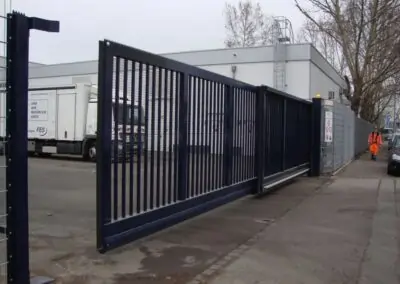
Already have an ironwork driveway gate you love, but want the convenience of opening it without getting out of the car? In many cases, you can automate an existing ironwork gate without replacing the entire structure. However, the gate must be suitable for powered operation, and its condition, weight, hinges, supporting posts, movement path, and available space all need to be assessed first.
For Melbourne homeowners, the decision usually comes down to three options: automate the existing gate as it stands, repair or reinforce it before installing a motor, or replace it if the structure or layout is unsuitable.
Understanding these options before requesting a quote can help you plan the work, compare costs fairly, and avoid investing in automation equipment that does not suit your gate. So, let’s understand the types of powered gate systems available for residential and commercial properties.
What Does It Mean to Automate an Existing Ironwork Gate?
Automating an existing gate means adding a suitable powered operating system to a gate that is currently opened and closed manually. Rather than replacing the gate purely to gain automatic operation, the installer assesses whether the existing structure can work safely and reliably with an appropriate motor or actuator.
Depending on the gate design, the installation may involve:
- A motor or actuator suited to the gate’s configuration and operating load.
- Mounting brackets and suitable fixing points.
- A control unit and remote controls.
- Optional access controls, such as a keypad or intercom, where suitable.
- Appropriate obstruction-detection and other protective devices selected for the installation.
- Electrical supply, wiring protection and isolation arrangements.
- A suitable manual-release arrangement or other contingency for a power failure.
- Testing, commissioning and instructions for the property owner.
The exact components depend on the gate, the chosen equipment and the site. A swing gate and a sliding gate do not operate in the same way, so their automation systems and installation requirements can differ considerably.
Importantly, fitting a motor does not repair a sagging gate, strengthen a weak post, or correct a gate that catches on the driveway. Any underlying mechanical or structural problems should be identified and addressed before automation proceeds.
However, electrical components should be selected and installed with appropriate safety precautions; the Queensland Government’s Electrical Safety Office guidance on buying and using electrical equipment provides general advice on choosing and maintaining safe electrical equipment.
Can Every Existing Ironwork Gate Be Automated?
No. Many existing metal gates are potential candidates for automation, but suitability cannot be determined by appearance alone. A heavy decorative gate might be in excellent condition, while a relatively light gate may have worn hinges, weak supports, or movement problems that make a retrofit impractical without remedial work.
A professional assessment should consider the following factors.
1. Gate frame and structural condition
Check the frame, joints, welds, and connections for significant corrosion, cracks, distortion, or evidence of poor repairs. Surface rust may be primarily a maintenance issue, whereas corrosion affecting structural sections can require more substantial work.
The gate should be assessed before a motor is selected. Adding powered movement to a damaged structure does not resolve the underlying problem.
2. Gate weight and dimensions
Ironwork gates vary considerably in size, construction and weight. A suitable motor must be rated for the actual gate and its operating conditions, including factors such as movement resistance, wind exposure where relevant, and the frequency of use.
Do not choose a motor based solely on its advertised weight rating. The installer should check the equipment manufacturer’s specifications and confirm that the complete arrangement is appropriate for the gate.
3. Hinges, rollers and tracks
A swing gate needs suitable hinges, secure fixing points and smooth movement throughout its opening arc. A sliding gate needs an appropriate track or cantilever arrangement, serviceable rollers and guides, and an unobstructed travel path.
Worn hardware, binding or poor alignment may need attention before a motor can be fitted. The gate should not be forced through its movement path to compensate for mechanical resistance.
4. Supporting posts and foundations
The posts and foundations must be suitable for the loads and forces associated with the gate and its powered operation. Heavy gates, weak posts, loose fixings or deteriorated foundations may require further assessment or reinforcement.
Do not assume that an existing post is adequate simply because it has supported a manual gate for years. Its condition and the proposed automation arrangement both matter.
5. Clearance and driveway layout
The gate must be able to open and close without striking vehicles, walls, fences or the ground. A sloping driveway can affect a swing gate’s clearance and opening geometry. A sliding gate needs sufficient space to move sideways and may require changes to the track, guides or surrounding layout.
Also, available space, pedestrian routes, drainage and the position of parked vehicles should all be considered during the assessment.
6. Power, controls and outdoor exposure
The installer should establish whether a suitable power supply is available, how wiring can be routed and which access controls are required. Outdoor exposure, moisture, dust and corrosion may also influence the equipment and protective arrangements selected.
Where mains electrical work is required, confirm the scope with the installer and ensure the work is undertaken by an appropriately licensed electrical professional where required.
Existing gate automation compatibility checklist
| Assessment area | What needs checking | Possible outcome |
| Frame and joints | Corrosion, cracks, distortion and weld condition | Proceed, repair first, or consider replacement |
| Weight and dimensions | Gate specifications and operating load | Select an appropriately rated system |
| Hinges or track | Wear, alignment and smooth movement | Adjust or repair where necessary |
| Posts and foundations | Stability, fixings and structural suitability | Proceed or assess reinforcement |
| Movement clearance | Ground slope, travel path and obstructions | Select a suitable mechanism or modify the layout |
| Power and access controls | Supply, wiring route and operating requirements | Plan the necessary installation |
| Safety | Crushing, trapping, impact and access risks | Specify and verify appropriate protective measures |
Note: This checklist is intended to help you prepare for an assessment. It is not an engineering certification or confirmation that a gate is safe to automate.
Swing vs Sliding Ironwork Gate Automation: Which Is Better?
The right system depends on how your existing gate opens, the space available, and the condition of the supporting structure. Neither swing nor sliding automation is automatically the better choice for every Melbourne property.
Automating a swing gate
A swing gate pivots on hinges and opens inward or outward. Automation may be suitable if the gate moves freely, its hinges and posts are appropriate, and there is enough room for the complete opening arc.
Driveway slope, gate dimensions, hinge geometry, and the location of vehicles or pedestrian routes can affect the design. A site assessment should establish whether the existing arrangement can accommodate the proposed actuator and movement.
Automating a sliding gate
A sliding gate moves sideways along a track or a suitable cantilever system. It can be a practical option where there is not enough room for a swing gate’s opening arc, provided there is sufficient run-back space and the gate can travel without obstruction.
The track, rollers, guides, end stops and supporting structure must be checked. A sliding gate that binds or is not adequately supported should not simply be fitted with a more powerful motor.
Comparing the options
| Factor | Swing gate | Sliding gate |
| Movement | Pivots through an arc | Travels sideways |
| Space to check | Full opening arc and ground clearance | Side clearance and run-back space |
| Hardware | Hinges, posts and actuator mounting | Track or cantilever system, rollers and guides |
| Potential constraint | Slope, opening arc or hinge geometry | Insufficient run-back space or track problems |
| Best next step | Assess movement, supports and clearance | Assess travel path, support and available space |
How Much Does It Cost to Automate an Existing Ironwork Gate in Melbourne?
There is no reliable single price for every existing ironwork gate. The final cost depends on the gate’s condition, its size and weight, the motor or actuator required, the work needed to make the gate suitable, and the safety and access-control equipment included.
A quote for a straightforward motor installation is not directly comparable with one that includes structural repairs, new supports, electrical work, and additional safety equipment. Ask for a written breakdown so you can compare the full scope rather than the headline price.
What affects the quote?
- Gate type and dimensions: The configuration, opening width, and operating load affect equipment selection.
- Motor or actuator: The system must suit the gate and the expected frequency of use.
- Existing hardware: Worn hinges, rollers, tracks or guides may need repair or adjustment.
- Structural work: Weak posts, damaged frames or unsuitable fixing points may require remedial work.
- Electrical requirements: Power supply, wiring routes and associated electrical work can add to the scope.
- Safety provisions: Appropriate protective devices and risk controls must be considered for the specific installation.
- Access controls: Remotes, keypads, intercoms and other controls affect the final specification.
- Groundworks and layout: Mounting changes, drainage issues or changes to the gate’s travel path can affect the work.
- Testing and handover: Commissioning, operating instructions and agreed maintenance information should be clear in the quote.
- Finishing work: Repairs to the gate’s finish or corrosion protection may be required or separately quoted.
How to compare automation quotes fairly
Request written quotes that identify the proposed equipment, repairs, electrical work, safety provisions, installation, testing, and exclusions. Check whether each contractor is pricing the same work. A lower quote may exclude repairs or other necessary items that appear in a more complete proposal.
Is It Cheaper to Automate an Existing Gate or Replace It?
Retaining the existing gate can avoid the cost of supplying a new gate, but that does not guarantee the lowest overall project cost. Repairs, reinforcement, hardware changes, and installation constraints can alter the comparison.
Replacing the gate involves additional supply and installation work, but may be worth considering if the existing structure is badly damaged, difficult to align, or unsuitable for the available automation hardware. A replacement may also provide an opportunity to change the design or opening arrangement.
| Decision factor | Retain and automate | Replace and automate |
| Existing condition | Most attractive when sound and correctly aligned | May suit a damaged or unsuitable gate |
| Initial work | Can be more limited if little modification is needed | Includes new gate supply and installation |
| Design options | Restricted by the existing gate and layout | More opportunity to change the configuration |
| Structural work | Repairs or reinforcement may still be necessary | New supports or foundations may also be necessary |
| Appearance | Retains the existing ironwork | Allows a new design or material |
| Overall value | Depends on condition and retrofit scope | Depends on replacement scope and site requirements |
Compare the complete cost of both options, including repairs, hardware, safety provisions, installation, and commissioning. If you value the existing gate’s appearance or craftsmanship, retaining it may be particularly appealing, provided its condition and configuration make automation practical.
Automatic Ironwork Gate Safety: What Needs to Be Checked?
Safety must be considered as part of the entire automated gate system, not as an accessory added at the end. A powered gate introduces moving forces and potential crushing, trapping, and impact hazards that need to be assessed for the particular property.
Identify crushing and trapping points
Potential hazards can occur near hinges, closing edges, posts, rollers, tracks, and other areas where moving parts approach fixed structures. The exact risks depend on the gate design and its travel path.
Children, pets, visitors, and pedestrians may enter the movement zone unexpectedly. Vehicles may also stop in the gate’s path. The installation should be planned to minimise foreseeable risks and prevent access to hazardous areas where practicable.
Choose protective measures for the actual installation
Depending on the design and risk assessment, appropriate measures may include obstruction detection, force limitation, photoelectric safety beams, protective edges, carefully positioned controls and separation of pedestrian access from vehicle movement.
No single device should be assumed to make every gate safe. The selected equipment must suit the installation, be fitted in appropriate locations and be tested during commissioning. Ask the installer to explain which hazards each protective measure is intended to address.
Confirm applicable standards and requirements
Applicable requirements depend on the equipment, installation and use of the gate. The installer should identify the relevant current standards, manufacturer instructions and any applicable Victorian electrical, building or workplace requirements for the proposed work.
Also, do not rely on a generic statement that an installation is compliant. Ask what has been assessed, which protective devices are included, how they will be tested and what documentation will be provided. Where electrical work is required, confirm the appropriate licensing arrangements.
Safety checklist before approving the work
- Has the gate’s structural condition and movement been assessed?
- Have potential crushing, trapping, and impact hazards been identified?
- Are the proposed protective devices suitable for the actual gate design?
- Have pedestrian access and the vehicle movement zone been considered?
- Are controls positioned appropriately for the intended users?
- Will the system be tested and commissioned before handover?
- Will the owner receive operating, emergency-release and maintenance instructions?
For repair or maintenance work, do not operate a gate that appears unstable or has been left without its normal support arrangements. Keep people away from the hazard and arrange an appropriate professional assessment.
What Happens if the Power Fails?
Before choosing an automation system, establish how the gate can be operated if the electricity supply fails or the motor develops a fault. The available arrangements depend on the equipment and installation.
Ask the installer:
- Does the proposed system provide a manual release?
- Where is the release located, and can an authorised user reach it safely?
- Is a compatible backup power option available for the selected equipment?
- What should you do if the gate is jammed, obstructed or visibly damaged?
- How should the gate be secured if it cannot be operated normally?
Battery backup is not universal and may depend on the motor and its configuration. Ask the installer to demonstrate the manual-release procedure and explain the contingency arrangements at handover.
However, never bypass a safety device, open electrical enclosures, or force a jammed or unstable gate. If the gate is damaged or cannot be secured safely, keep people clear and seek professional assistance.
Can an Old or Rusty Ironwork Gate Be Motorised?
Age alone does not determine whether an ironwork gate can be automated. The important questions are whether the gate remains structurally sound, moves correctly, and can be supported by a suitable automation system.
Surface rust and faded paint may be mainly cosmetic, although the underlying metal should still be assessed. More serious warning signs include deep corrosion, cracked welds, loose connections, sagging, distortion, worn hinges, and unstable posts.
Repainting or treating rust can improve the finish, but cosmetic work cannot replace structural repairs where they are needed. A gate that binds or drops under its own weight should be assessed before a motor is selected.
If the gate is worth retaining for its appearance or sentimental value, discuss restoration and automation as separate parts of the project. The installer can then identify which repairs or modifications are necessary before the proposed system is fitted.
How Long Does Existing Gate Automation Take?
Installation time depends on the gate’s condition, the type of automation, site access, power availability, and the amount of remedial work required. A straightforward retrofit is different from a project involving structural repairs, new supports, groundworks, or changes to the gate’s travel path.
The work may involve:
- Inspecting and preparing the existing gate.
- Adjusting or repairing hinges, tracks or rollers.
- Completing agreed structural or mounting work.
- Installing the motor, controls, and wiring.
- Installing and checking the specified safety devices.
- Testing movement and protective functions.
- Demonstrating normal operation and emergency procedures.
Ask for an expected schedule after the site assessment. Avoid relying on a generic installation duration before the contractor has established the actual scope of work.
What Should an Existing Gate Automation Quote Include?
A useful quote should describe what will be supplied and installed, what condition the existing gate is in, and what work is excluded. It should also explain how the proposed equipment suits the gate and how safety will be addressed.
Use this checklist when comparing proposals:
- Site assessment and findings about gate compatibility.
- Condition of the frame, hinges, track, posts and foundations.
- Proposed motor or actuator and the reason for its selection.
- Repairs, adjustments or reinforcement included in the price.
- Electrical work, cable routing and associated requirements.
- Remote controls, keypads, intercoms or other specified access controls.
- Safety equipment, its intended function and testing arrangements.
- Manual release and any proposed backup power arrangements.
- Installation, testing, commissioning and owner handover.
- Exclusions, assumptions and any owner-supplied items.
- Warranty terms, maintenance recommendations and expected schedule.
Ask contractors to clarify ambiguous exclusions and compare equivalent scopes. Do not assume that every item on this checklist is included in a standard installation package.
How to Prepare for a Gate Automation Assessment
You can make an initial discussion more productive by gathering information about the existing gate and its surroundings.
- Take clear photographs of the gate from both sides.
- Identify whether it swings or slides.
- Provide approximate opening dimensions if known.
- Photograph visible rust, damage, sagging, or movement problems.
- Include close-up photographs of hinges, rollers, tracks, and posts.
- Show the driveway slope and any available side clearance.
- Indicate where a power supply may be available, if known.
- Describe your preferred controls, such as remotes, a keypad, or an intercom.
- Explain how often the gate is used and what access it needs to provide.
- Include details of any existing motor or control equipment.
- Provide the property location and your preferred timing.
Photographs and approximate measurements help with an initial conversation, but they cannot confirm structural suitability or replace an on-site assessment where one is needed.
Frequently Asked Questions
Can you automate an existing ironwork gate?
Yes, many existing ironwork gates can be automated if the structure, hinges or track, supports, movement path, and site conditions are suitable. An installer should assess the gate before recommending a system.
Can a heavy wrought-iron gate be automated?
Potentially. The motor must be rated for the actual gate and operating conditions, while the hinges, posts, foundations, and movement must also be suitable. Weight alone does not determine compatibility.
Is it cheaper to automate an existing gate or replace it?
Retrofitting can avoid the cost of a new gate when the existing structure is sound and requires little modification. Repairs or reinforcement may change the comparison, so request written quotes for both options where replacement is being considered.
How much does existing gate automation cost in Melbourne?
The cost depends on the gate, motor specification, repairs, electrical work, safety provisions and access controls. A site-specific written quote is the most reliable way to understand the complete cost.
Can an old or rusty iron gate be motorised?
Age alone is not a barrier, but structural condition matters. Significant corrosion, damaged welds, sagging or worn hardware should be assessed and addressed before automation equipment is installed.
Do the gate posts need reinforcing?
Not always. The posts, fixings, and foundations need to be assessed for the proposed gate and automation system. Reinforcement may be required if the existing supports are unsuitable.
Is swing or sliding automation better for iron gates?
Neither is universally better. Swing gates need adequate opening clearance and suitable hinges; sliding gates need enough sideways run-back space and an appropriate track or cantilever arrangement.
Can a gate on a sloping driveway be automated?
It may be possible, but the slope can affect swing clearance, gate geometry, and sliding arrangements. The installer should assess the movement path and available space before selecting a system.
What safety devices does an automatic gate need?
The protective measures depend on the gate design, identified hazards, equipment, and applicable requirements. Ask the installer to explain the proposed obstruction detection, protective devices, commissioning tests, and any relevant standards.
Can an automatic gate be opened during a power cut?
That depends on the system. A manual release or compatible backup power option may be available. Ask the installer to demonstrate the procedure and explain what to do if the gate is damaged or obstructed.
How long does a retrofit installation take?
The duration depends on gate condition, equipment, electrical work, site access, and any repairs or groundworks. Ask for an estimated schedule once the scope has been assessed.
What should I provide to get an accurate quote?
Provide photographs, approximate dimensions, details of the gate type and visible damage, driveway layout, possible power access, and your preferred controls. An on-site assessment may still be required to confirm compatibility and price.
Should You Automate Your Existing Ironwork Gate?
Automating an existing ironwork gate can be a practical way to retain a gate you value while adding powered operation. The key is to establish whether the gate and its supporting structure are suitable before selecting the motor.
So first, check the frame, hinges or track, posts, clearance, power arrangements and safety requirements. Then compare the complete cost of a retrofit with any necessary repairs against the cost of replacement.
SF Gates & Fencing offers gate installation and automation services across Melbourne. So, if you are considering an upgrade, explore its gate automation services and explain the type and condition of your existing gate. A discussion about your specific layout and requirements can help establish the next step without assuming that every gate is suitable for automation.